
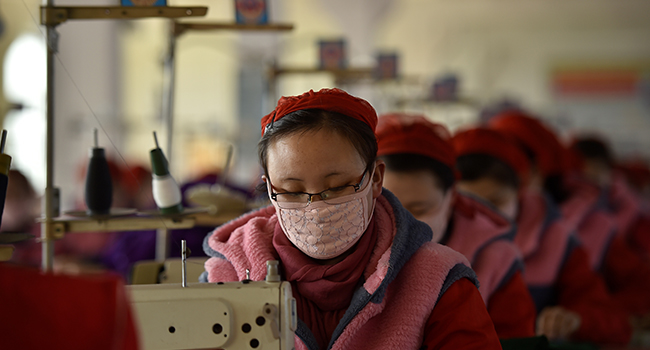
The demand for Personal Protective Equipment (PPE) such as masks and respirators following the outbreak of novel coronavirus (2019-nCoV) has increased astronomically.
The Director-General of the World Health Organisation (WHO), Dr Tedros Ghebreyesus, disclosed this on Friday while giving an update on measures being put in place to curb the spread of the virus.
He decried that some stakeholders in the production chain have also taken advantage of the situation to inflate the prices of apparatus used by people to avoid being infected.
Ghebreyesus said, “As I mentioned on Wednesday, WHO is sending testing kits, masks, gloves, respirators and gowns to countries in every region. However, the world is facing severe disruption in the market for personal protective equipment.”
“Demand is up to 100 times higher than normal and prices are up to 20 times higher. This situation has been exacerbated by widespread, inappropriate use of PPE outside patient care.
“As a result, there are now depleted stockpiles and backlogs of four to six months,” he added.
The United Nations health agency chief also give an update on the number of lives lost since the outbreak of coronavirus since December 2019.
He disclosed that more cases of infection were confirmed in China where the virus first broke out but fewer incidences were reported.
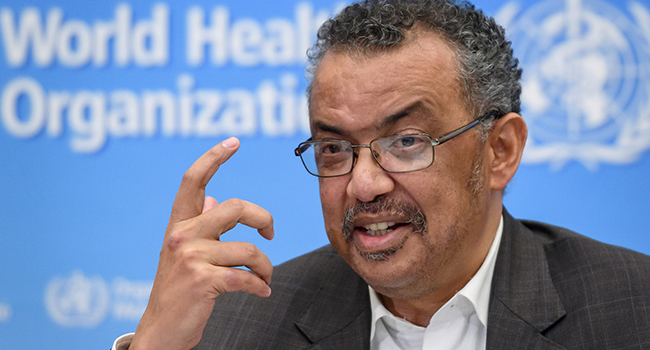
“As of 6am Geneva time today, there were 31,211 confirmed cases in China, and 637 deaths,” Ghebreyesus told the press conference.
He stated, “For the last two days there have been fewer reported new infections in China, which is good news, but at the same time, we caution against reading too much into that.
“The numbers could go up again. As you know, epi curves can zig-zag. Outside China, there are 270 cases in 24 countries, with one death.”
The WHO chief further decried the situation where global stocks of masks and respirators were insufficient to meet the needs of the agency and its partners.
According to him, the UN body estimates that global frontline health emergency responders will require approximately seven per cent to 10 per cent of market capacity.
Ghebreyesus said the percentage may be higher for other critical supplies as the frontline health workers in China require the bulk of PPE supplies.
He recalled his discussion with the Pandemic Supply Chain Network – which included manufacturers, distributors and logistics providers – to ensure that PPE supplies get to those who needed them.

The health agency chief gave an assurance that the network would focus initially on surgical masks because of the extreme demand and market pressures.
He thanked the companies that have taken the decision to only supply masks to medical professionals.
Ghebreyesus warned, “There is limited stock of PPE, and we need to make sure we get it to the people who need it most, in the places that need it most.
“The first priority is health workers. The second priority is those who are sick or caring for someone who is sick. WHO discourages stockpiling of PPE in countries and areas where transmission is low.”
“We call on countries and companies to work with WHO to ensure fair and rational use of supplies, and the rebalancing of the market.
“We all have a part to play in keeping each other safe,” he said.

No comments:
Post a Comment